
Jan Brown, Matthew Curtis, Megan Munro + Henry Shawcross, Rachel Peachy + Paul Mosig
5 November – 6 December 2026
Location | Civic Square, 180 London Circuit, Canberra ACT 2601
Opening Hours | Daily | 24 hours
Entry | Free
Access | Wheelchair accessible
NEST | Design for the Displaced Future is a major public art commission for the 2026 Craft and Design Canberra Festival, responding to the Festival theme of Dissent. Curated by Craft and Design Canberra, the installation brings together a series of individual sculptural works exploring the universal instinct to nest, connect and belong.
With climate change increasingly reshaping communities, landscapes and habitats across the world, NEST asks how we understand our relationships with place, materials and one another in a changing world. Four artists and collaborative teams have been commissioned to respond to this question, each bringing a distinct material language and conceptual approach.
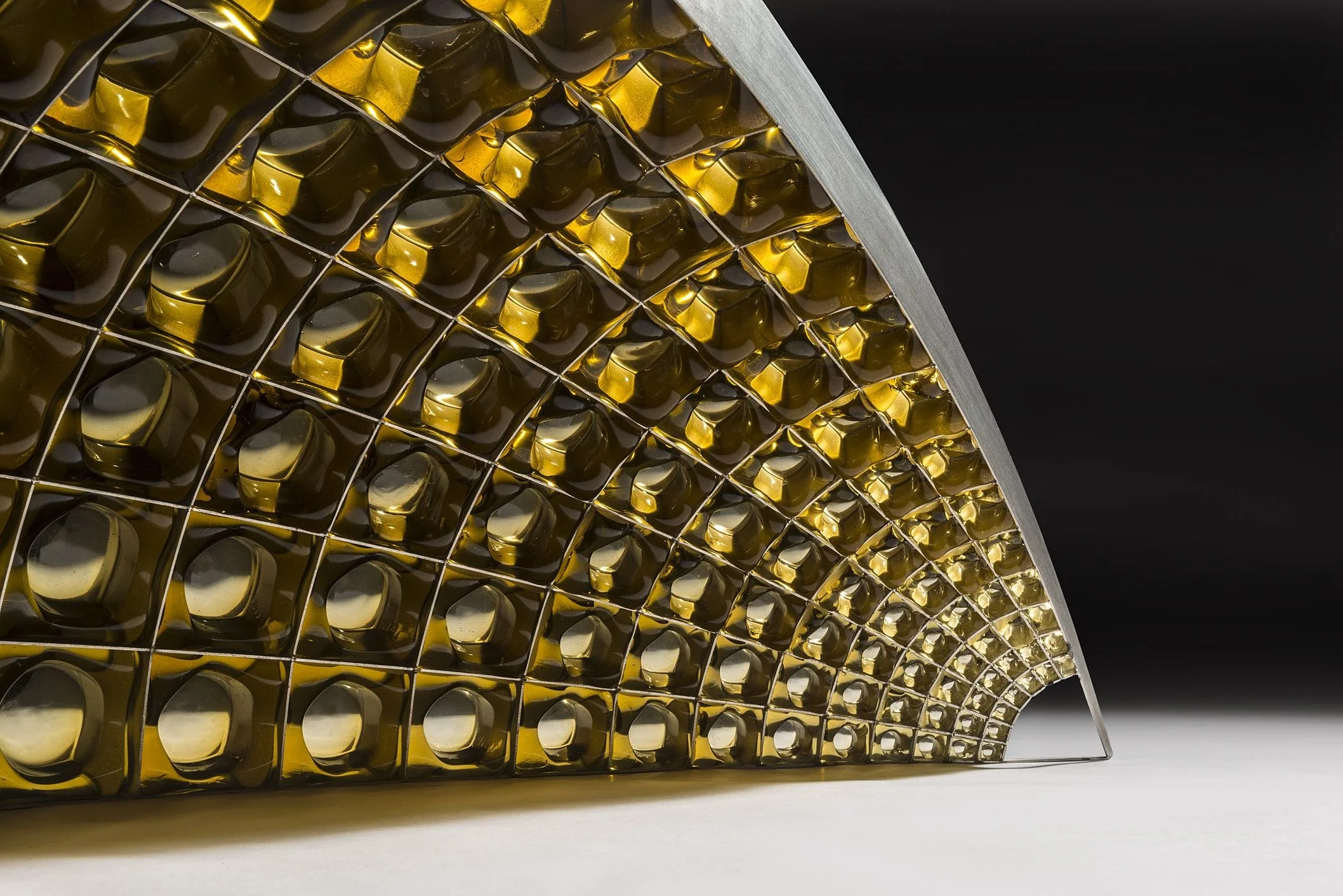
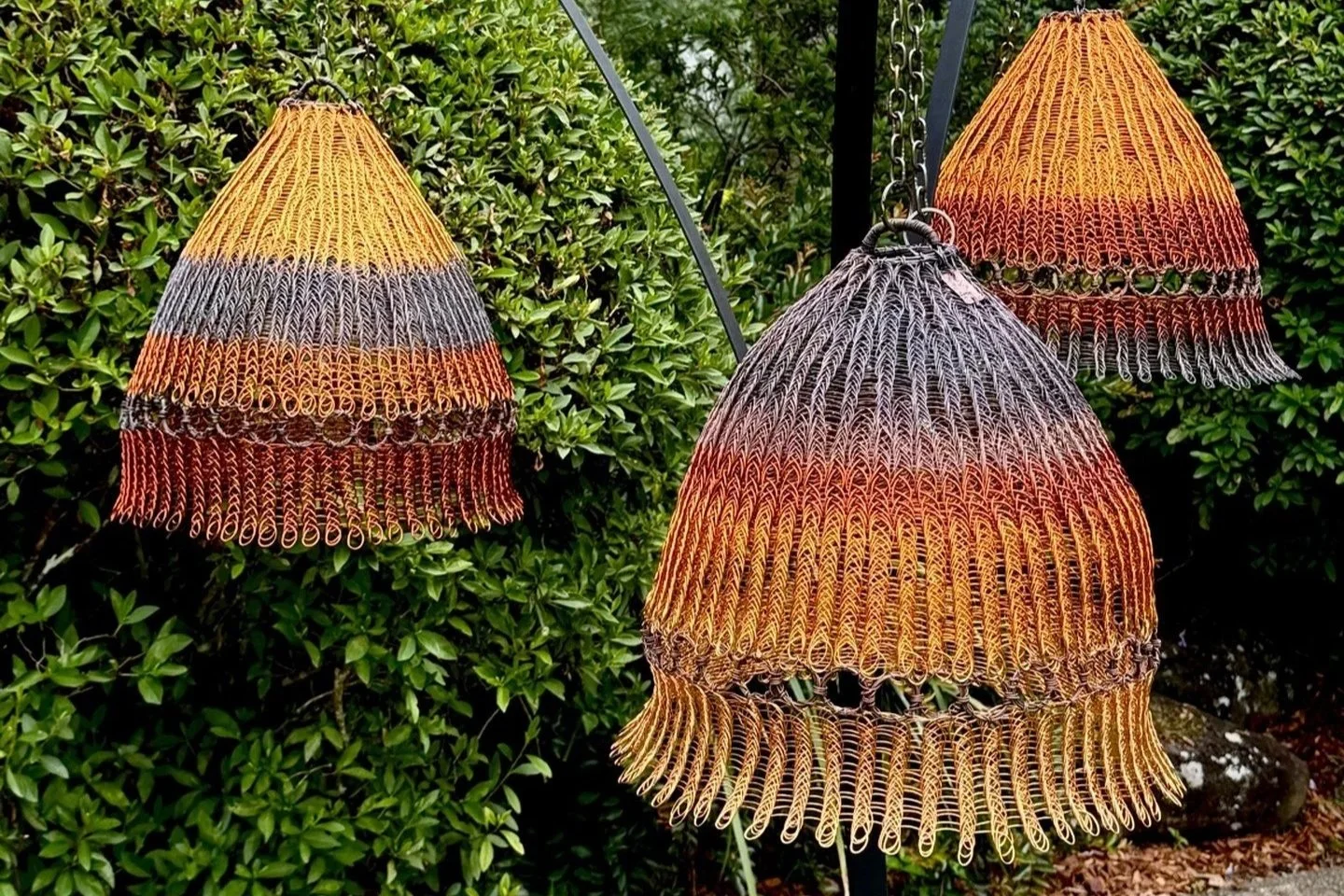
Jan Brown's Tidal Canopy weaves copper wire into forms inspired by the resilience and structure of limpet shells, gathered together as a suspended canopy that reflects patterns found in the natural world. Megan Munro and Henry Shawcross's The Pod of Belonging constructs a cocoon like form from upcycled textiles, offering a tactile exploration of queer, trans and disabled identity, connection and community. Matthew Curtis's Reuse Refuge transforms salvaged architectural glass into an illuminated structure that reimagines discarded materials as resources for a circular future. Rachel Peachey and Paul Mosig's Shielded encloses visitors in a copper mesh Faraday chamber, creating a space for reflection and consideration of the impacts of constant digital connection.
Together, these works create a temporary gathering of distinct artistic voices, revealing how materials can hold stories of place, memory, identity and transformation. Visitors are invited to move between structures, encountering different approaches to making, materiality and belonging, and to consider the ways we might reimagine our connections with the world around us.
Through the language of craft, each work demonstrates how material practices can challenge assumptions, reveal new perspectives and propose alternative ways of engaging with uncertain futures.
NEST will be installed from late October 2026 and remain on public display throughout the Craft and Design Canberra Festival, running 5 to 15 November 2026, before deinstallation in early December.
-
Jan Brown is an Australian artist whose practice centres on handwoven sculptures created from copper wire. Drawing inspiration from the environments in which she lives, walks and travels, Brown explores the relationship between material, landscape and form through intricate woven structures that investigate light, texture and transparency.
Originally trained in ceramics at TAFE Southbank Brisbane and Architectural Ceramics at TAFE Eagle Farm, Queensland, Brown developed an established ceramics practice, exhibiting widely and receiving awards since 1990. In 2010, she transitioned from ceramics to metal weaving, embracing a more portable practice that expanded her exploration of sculptural forms and enabled experimentation with lighting, wall works and three dimensional structures.
Brown’s work is held in public and private collections across Australia and internationally, and is represented in galleries in Brisbane, Mount Tamborine, Yamba and Canberra.
SEE ARTIST WEBSITE HERE -
Megan Munro graduated from the Canberra School of art in 1996 with a Bachelor of Arts (Vis), with Honours. Between completing art school and 2004 Megan’s work was featured in many group exhibitions. This included The 17th National Craft Acquisition Award, at Museum and Art Gallery of the Northern Territory in 1997; Surfacing, at Craft ACT, in 2000. Megan was also a finalist in the WOW Awards for wearable art, their work was later purchased by the WOW Museum in Aotearoa.
In 1997 they held their first solo exhibition, Elements. This exhibition featured sculptural forms made from aluminimum screen wire and woven stainless steel and nylon monofilament forms. Their last solo exhibition Out of the Shadows was in 2023. This exhibition featured small scale sculpture works, a video work and digital drawings. The work drew on their experiences of being a queer disabled person and ‘glimmers’ found in the everyday.
-
Henry Shawcross (he/him) lives and works on Ngunnawal and Ngambri country. He is a queer trans disabled artist with a life-long interest in textiles who returned to visual art as self-expression when experiencing chronic illness. His practice explores gender euphoria, queer joy, and disability pride through stitching, constructing textiles, printmaking and drawing. He has just completed a Bachelor of Visual Arts at ANU. As a transgender man who acquired traditional textile techniques in childhood, he aims to push the largely binary gender boundaries still assumed in contemporary textile arts. He is also inspired by the therapeutic use of craft to create works that express his positive sense of belonging to trans, queer, and disabled communities.
-
Matthew Curtis is a glass artist whose rigorous material based practice explores the shifting qualities, translucency and potential of glass. Introduced to glassblowing through an informal apprenticeship at Denizen Glass in Sydney in the early 1990s, Curtis has developed an experimental approach that extends traditional techniques through unconventional processes, sustained research and material investigation.
Working from his studio in Queanbeyan, NSW, Curtis has increasingly focused on reclaimed architectural glass, reflecting an ongoing commitment to environmental sustainability. His blown and cast works explore transparency, colour and the delicate boundaries between structure and surface. His current practice investigates margins and intersections, drawing attention to the subtle patterns and complexities found within biological structures. For Curtis, these points of connection become metaphors for how materials, objects and ideas can adapt, accommodate and exist in harmony.
Curtis's work is held in significant public and private collections internationally, including the Corning Museum of Glass, the Saxe Collection at the de Young Museum (San Francisco), Ernst Stiftung (Germany), the National Gallery of Australia, the Wagga Wagga National Glass Art Collection, Parliament House and the Murdoch Children's Research Institute. His large scale illuminated public sculpture Field of Light was commissioned for Canberra. Curtis has undertaken prestigious residencies and received recognition through programs including the Wheaton Arts Creative Glass Fellowship (New Jersey), the Corning Museum of Glass International Artist in Residence (New York), the Canberra Glassworks Fellowship and the Fuse Prize.
SEE ARTIST WEBSITE HERE -
Rachel Peachey and Paul Mosig are Canberra-based visual artists and designers whose collaborative practice brings together textiles, audiovisual media, installation and site-based research. Working at the intersection of art, ecology and experimental design, they create immersive installations and time-based works that translate environmental tensions into reflective, sensory experiences.
Grounded in Human Ecology and long-term fieldwork, Peachey & Mosig’s practice employs cross-disciplinary methods that integrate material, technological and somatic processes. Through residencies, organisational partnerships and research-led projects, they have developed work across Australia, Asia and Europe.
Recent projects include a three-channel video performance presented at the Sydney Opera House and Deep Pass, an award-winning underground projection commissioned for the North Sydney Art Prize. Their ongoing research explores ecological grief, ephemerality, material inheritance and the cultural and political systems that shape human–environment relationships. These investigations inform both the conceptual and material development of their work, offering innovative and accessible pathways for audiences to engage with contemporary ecological and cultural complexity.
SEE ARTIST WEBSITE HERE
Proudly supported by Act Government and City of Design funding

Images
Matthew Curtis, Increment (detail), 2026 | Photo by Rob Little
Jan Brown, Limpets, 2026 | Photo courtesy of the artist